Writer’s Statement
Portfolio 1

Portfolio 2
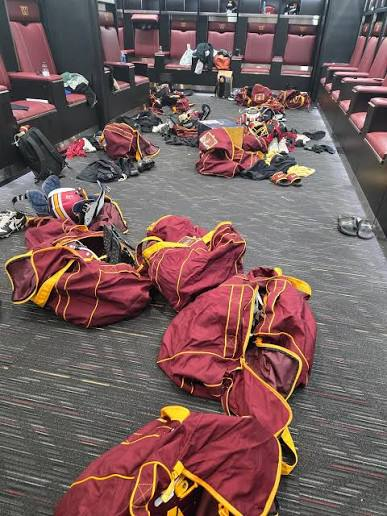
Portfolio 3

Welcome to my creative writing portfolio. Each piece included in this collection was either created or finalized throughout the semester. I chose work that I was proud of and that demonstrated my growth both analytically and creatively as a writer. Included in this portfolio is a literary analysis with reflection followed by two pieces of creative nonfiction: The Weight of the Bag and Reps. Each of these essays was composed for different assignments, but all tackle similar concepts surrounding identity, memory, loss, and how life experiences shape us into who we are.
The literary analysis focuses on “Lot’s Wife” by Anna Akhmatova, “Diving into the Wreck” by Adrienne Rich, and “The House of Asterion” by Jorge Luis Borges. While conducting research and drafting the essay, I found myself interested in each author’s decision to retell stories or ancient mythology from unusual points of view. None of these poems focuses on the traditional hero. Instead, they share the narrative of characters that have been misconstrued, forgotten about, or quickly judged. Studying these authors helped me to understand how identity can be shaped by memory and grief as well as the stories others tell about us. The author’s reflection that follows expands on those concepts while explaining how these readings influenced the way I interpret modern-day mythology and the faceless characters that exist outside of the story.
The two works of creative nonfiction expand on many of the themes mentioned above while weaving in personal experience. “The Weight of the Bag” tells the story of a college football player lugging around his equipment while also struggling to balance the emotional baggage of home, family, and expectation. The football player’s bag serves as a metaphor for responsibility and maturation. “Reps” deals with loss by comparing the simple repetition of football practice to how humans learn to accept grief little by little. Instead of writing about one life-altering event, this piece looks at small moments of loss that help us handle the big ones. It also explores how sentimental memories can be attached to mundane objects.
Many of the authors we read this semester had a large impact on the way I approached these works of fiction. Anna Akhmatova taught me how you could retell a story that everyone knows and make it heartfelt by simply showing compassion to the characters. Adrienne Rich proved to me that when diving into something as sensitive as mythology, you should challenge yourself to face the harder truths instead of accepting what is simply given to you. Jorge Luis Borges gave me insight on how to manipulate point-of-view in order to change how readers perceive a character completely. Authors like Carmen Maria Machado encouraged me to use plain objects as powerful symbols with rich emotional context. Even Liz Bishop’s style of addressing loss and repetition can be seen in how Reps is structured.
Over the course of the semester, I noticed an improvement in my use of sensory detail and symbolism. I began to focus on really developing a setting that readers could experience through all five senses. I also learned how to use physical objects as representations of emotional experiences. A football player’s equipment, athletic tape, a shoebox filled with memories, and even a text message full of expectations were all used to discuss ideas of identity, family, memory, and what it means to belong. Instead of explicitly stating how a character felt, I learned to use their experiences and imagery to reveal those feelings instead.
Reading through all of these pieces, I’ve noticed how my writing style evolved from analyzing other people’s work to creating my own work that deals with similar ideas and uses some of the same techniques. I became more comfortable with allowing the reader to discover information on their own. My imagery became stronger as I learned to trust that readers would fill in the finer details of a description with information from their own personal experiences. What you see in this portfolio is evidence of my growth as a writer. Each piece can be read independently, but together they speak to the process of remembering, accepting the weight that comes with loss, and learning about ourselves through life’s experiences.
Looking Back at the Wreck: Memory, Myth, and Identity in Akhmatova, Rich, and Borges
Anna Akhmatova’s “Lot’ the Wife,” Adrienne Rich’’s “Diving into the Wreck,” and Jorge Luis Borges’ “The House of Asterion” center characters who are trapped inside larger narratives. From transformation to myth, each text explores themes of loss, memory, identity, and close examination of what has been damaged or misunderstood. “Lot’ takes the myth of Lot’s wife and transforms her biblical punishment into the tragedy of a woman who could not bear to leave her home behind. “Diving into the Wreck” features a speaker who goes underwater to “see the wreck” and insists that she seeks “the wreck and not the story of the wreck” because myths get handed down and often conceal what happened. “The House of Asterion” reimagines the myth of the Minotaur from the monster’s inspirational texts that argue that myth is incomplete and often unjust. By revisiting misunderstood or forgotten characters, each text proves that identity is shaped by memory and loss.
Akhmatova presents Lot’s wife’s transformation as grief rather than disobedience. The poem begins with Lot following “God’s shining agent,” while she hears a voice saying, “It’s not too late, you can still look back.” This moment is important because the voice paints Sodom as more than just sinful. Instead, she remembers “the red towers of your native Sodom,” “the square where you once sang,” and “the tall house / where sons and daughters blessed your marriage- bed.” These images associate Sodom with her life. She did not just live in a city full of sin; she lived in a place that made her happy with the people she loved. The repetition of “where” also reminds the reader that Sodom was home. When she turns back, she gazes at all she is losing. Lot’s wife’s transformation pains Akhmatova because it feels so permanent and tragic. The poem reads “A single glance: a dart of pain / stitching her eyes before she made a sound.” Pain “stitches” her eyes together, connecting sight with suffering. Her glance was quick, but her punishment was not. Her body “flaked into transparent salt,” and then her “swift legs rooted to the ground.” Lot’s wife is transformed into salt, a substance that represents grief, crying, memory, and permanence. She becomes stuck in place, literally transformed into a monument to the home she lost. Through this image, Akhmatova implies that grief can paralyze someone who is still mourning what they love. By ending with sympathy for Lot’s wife, Akhmatova urges the reader not to judge her. The speaker rhetorically asks, “Who will grieve for this woman? Does she not seem too insignificant for our concern?” This couple of lines illustrates how Lot’s wife is easy to forget. In the biblical story, she is only a lesson about disobedience. Akhmatova challenges that portrayal by asking who will mourn her. The speaker explains, “Yet in my heart I never will deny her, / who suffered death because she chose to turn.” Lot’s wife chose to look back. Akhmatova gives her agency by saying that she made a choice. She could not move forward because of love, memory, and grief.
Unlike Akhmatova’s speaker, Rich makes a conscious decision to look at the past. She “dives into the sunken place” to see what has been damaged and lost. This idea of choice contrasts with Lot’s wife, who was transformed when she turned back. The speaker in “Diving into the Wreck” prepares for her descent. She says, “First having read the book of myths, / and loaded the camera, / and checked the edge of the knife- blade.” All these things symbolize her journey. She is diving to confront what may pain her. The book represents the stories people already know. The camera represents memory. The knife blade represents cutting through stories that may be false or incomplete. When she goes into the ocean, she carries these tools with her to examine the past.
Unlike Akhmatova’s drowned city, Rich’s poem evokes a dreamlike feeling. Once she begins to sink, the speaker says “First the air is blue and then / it is bluer and then green and then / black.” The shifting colors mark her movement from reality and into the ocean’s depths. The water symbolizes more than just a body of water. It represents the dive into memory and history and even the unconscious. This is why the speaker says that “the sea is another story / the sea is not a question of power.” Rich rejects the idea of force. To exist in the depths, the speaker must “learn alone / to turn my body without force / in the deep element.” True understanding requires patience and letting go of control. The speaker clarifies her intentions with these lines: “I came to explore the wreck. / The words are purposes. / The words are maps.” To explore the wreck, she must use language to find her way. Words can guide her, but they will not provide her with the truth unless she takes action. This is why she wants to see “the damage that was done / and the treasures that prevail.” This implies that while the wreck may be damaged, it is not void of worth. She knows there is something to recover by looking at the actual “thing itself and not the myth.” Rich implies that myths conceal what people have actually suffered. The speaker wants to seek evidence instead of learning the story others might tell. The poem ends with an acceptance of shared identity and loss. “I am she: I am he,” becomes both mermaid and merman to demonstrate closeness with the wreck. In that way, the speaker removes labels of fixed identity. She transitions from speaking about the mythical figure to including herself and then the reader in “We are, I am, you are.” Finally, the speaker says she will leave the wreck with a “book of myths / in which / our names do not appear.” This ending perfectly captures how people are often forgotten by official stories. Rich and Akhmatova focus on the ignored aspects of myth to ask what happens to the people who don’t make it into the story. Myth often leaves people unnamed, but both poets suggest that these people have suffered just as much as the heroes.
Like Akhmatova, Borges centers a misunderstood mythological figure in “The House of Asterion.” The poem follows Asterion, who is understood to be the Minotaur. From the beginning of the story, Asterion seems proud but also very alone. He says, “I know they accuse me of arrogance, and perhaps misanthropy, and perhaps of madness.” Throughout the story, however, the reader understands that Asterion feels isolated and confined in his house. He says “I never leave the house,” but insists that “its doors…are open day and night to men and to animals as well.” Asterion lives in a world shaped by fear, myth, and guilt by association. The most important symbol in the story is Asterion’s house. He says, “All parts of the house are repeated many times, any place is another place.” Later, he makes the bigger claim that “The house is the same size as the world; or rather it is the world.” Asterion’s house symbolizes his mind. Everything is repetitive, and he cannot find his way out. Not only is the house a literal labyrinth, but it also represents his psychological state. He dreams of the other Asterion and builds an entire mythology around his house to escape the sameness of his mundane routine. Asterion does not exist as himself outside of myth. When he steps into the street, people pray, throw stones, and scream. He lives in constant fear that anyone he meets will realize who he is and leave him isolated again. Because he is treated as a monster before anyone speaks to him, Asterion runs back to his house. He says, “The fact is that I am unique,” but his uniqueness does not make him proud. It only makes him lonely. Borges made me sympathetic toward a character that, in most stories, is the villain. Asterion is humanized through Borges’ empathy. The ending reshaped how I understood Asterion’s entire story. He believes someone will come for him and take him “to a place with fewer galleries and fewer doors.” Asterion does not understand that this man will eventually kill him. When Asterion sees Theseus, he says, “The Minotaur scarcely defended himself.” This ending shocked me because I did not know if Asterion wanted death or not. Implicitly, he did want death because freedom from his routine equals freedom from loneliness. Borges changed the hero’s myth by sympathizing with the monster.
All three texts challenge the reader to question single-perspective narratives. Grief for Lot’s wife challenges the reader not to judge. Rich’s speaker challenges readers to look past “the story” and face damaged history. Asterion forces readers to empathize with someone they think they know from mythology. Each text features a transformation. Lot’s wife became salty after she looked back. Rich’s speaker becomes fluid, shifting between genders and perspectives down into the wreck. Asterion transforms in my mind as I discover his loneliness throughout the text. These transformations show that identity is fragile. It shifts based on memory, trauma, and who controls the narrative. Each speaker also suggests that damage and loss are necessary for meaning-making. Lot’s wife loses her home and life, but Akhmatova allowed her to become a sympathetic mythological figure. Rich’s speaker found a ship full of ruin, but discovered “treasures that prevail.” Asterion loses his freedom, companionship, and ultimately his life, but Borges allowed Asterion to define himself before death ended his narrative. In all three poems, the past cannot be ignored because it has been damaged. The speakers must confront either literally or emotionally what once was, whether that is looking back at Sodom, diving into a wreck, or wandering through one’s mind palace. Rich, Akhmatova, and Borges all suggest that one must understand loss to understand identity. Until we understand who has been hurt and how, we cannot understand what shapes someone.
Personal Reflection / Reader Response
The line from “Lot’s Wife” that stuck with me most was toward the end of the poem. Akhmatova writes, “Lot’s wife suffered death because she chose to turn.” Before reading this poem, I sympathized with Lot’s wife because I thought she was forbidden from looking back. However, Akhmatova changed my perspective. Lot’s wife chose to look back because she loved where she lived. This made the poem hit differently for me because sometimes people are just so overwhelmed by grief that they cannot move on. Looking back means that your home or past loved ones mattered. What stuck with me about “Diving into the Wreck” is the imagery of damage and treasure. I loved the line “I came to see the damage that was done / and the treasures that prevail.” This wreck is not perfect because people do not remain unharmed by traumatic events. They still have value, though. They still have history and hopefully survived what hurt them. While the speaker goes down to the bottom of the ocean to investigate the wreck, she is looking for the truth. She does not want to listen to the story; she wants to see it for herself. That line stuck with me because life is rarely all bad or good. You have to face the damage to find meaning in survival. “The House of Asterion” reminded me that people can be misunderstood despite how they appear. At the beginning of the story, Asterion explains why most people stay away from him. I remember thinking how lonely these lines made me feel. “I imagine the other Asterion coming through these gates.” He has created an entire person in his mind just to feel less alone. Everyone is afraid of him, but Asterion also does not get to choose his home or his job. Borges makes me empathetic toward someone I thought I knew from mythology. At the end of the story, Theseus says, “The Minotaur scarcely defended himself.” Asterion’s death was not a victory. It was an escape from his lonely life.
Reading all three works changed how I view mythology. Mythology, to me, meant stories with obvious heroes/villains/moral lessons. Each of these texts proved me wrong. Lot’s wife was not just disobedient; she loved where she lived. The diver was not just swimming for treasure. She was searching for truth and facts. Asterion was not a mindless monster. He was just lonely and misunderstood. Mythology can be about minor characters and seeing the world from their perspective. These texts made me emotional because I sympathized with every single character. People who are forgotten, villainized, or misunderstood are still humans with emotions, trauma, and history.
The strap dug into my shoulder before I reached the door.
I pulled the football bag higher on my shoulder, but the buckle only dug into my neck. The zipper hung halfway down. A glove hung off my wrist like a dead hand. My cleats slapped my thigh with every step. Inside the bag, grass still tickled my fingers. Gloves smelled like sweat and rubber. Tape still stung my cheeks. Everything still smelled like football, and that sour smell that never seems to leave sports equipment.
The hallway leading out of the locker room was chilly. Air bumps hid beneath my arms. The air- conditioning growled above my head, constant and loud as if it had stayed on all night just to freeze everyone before practice. Somewhere down the hallway, a door slammed. Someone laughed. Metal lockers clanked open and shut. The noises ricocheted against concrete walls, clear as a bell.
My phone vibrated in my pocket.
Mom.
I knew before I looked. She always sent texts around the same time. Sometimes it was just a sentence or two. Have a good practice. Love you. Be safe. Other days, it was simply a heart. I pulled my phone from my pocket and read her name on the screen.
Proud of you. Keep going.
I stared at my phone until the screen went black.
Behind me, someone asked, “You good?”
I spun around like I’d done something wrong. “Yeah,” I said. “I’m straight.”
He nodded and continued walking, his slides squeaking against the floor. I stuffed my phone back into my pocket before he passed me. Not because it didn’t mean anything. Just because if I replied right, then it may have been too small for how much it mattered.
The bag pulled down across my shoulder again.
For a second, I wasn’t even in Memphis anymore. I was twelve again, standing outside my mom’s car before a Little League game. Little enough where my shoulder pads made me look wider than I was. The Alabama sun was bright and angry, hot enough to make the pavement glitter. My helmet sat high atop my head and slid down my forehead when I ran. Parents sat in folding chairs underneath handmade tents. Ice clanked in coolers. Whistles blew on another field. Somebody’s grill smoked behind the concession stand, and everything smelled like freshly cut grass, charcoal, and sunscreen.
Back then, my bag had almost swallowed me. I dragged it more than I carried it. Cleats banged my ankles and left bloody bruises on my legs. I didn’t worry about scholarships or depth charts or film study or how your body could be weighed, timed, taped, and trained and still feel like a child’s at times. All I wanted was to hit somebody else and hear my family cheer.
I remembered my dad’s voice. Not word-for-word, but how it sounded. Low. Close. The kind of voice that could reach you in a crowd without yelling. I remember glancing towards the sideline after a play, looking for him before I knew I was looking. Memory likes to play tricks like that. It doesn’t always give you the whole person back. Sometimes it gives you a laugh. A hand. Shoes by the door. A voice yelling behind a fence.
Halway lights buzzed above my head.
I blinked and looked down at my feet. Memphis blue stripes on the side, toes scuffed from dragging. Black streaks dried where cleats and rubber soles met the floor. Someone had spilled water by the entrance. The puddle bounced ceiling lights back at the ceiling in fragmented shapes. I stepped around it and continued down the hallway.
The locker room was already stirring. Someone had a speaker on, and music spilled from underneath their door. Guys were strapping tape onto wrists, shirts halfway over their heads, tossing clothes into bags, fighting over who brought snacks, laughing at a joke someone probably wasn’t that funny telling. A trainer walked by, tape coiled around his fingers like bracelets. The smell of Bengay hung underneath everyone’s noses, thick as perfume.
I dropped my bag in front of my locker. It thudded against the floor.
Nobody noticed me at first. Kind of funny about locker rooms. You could be surrounded by people and alone in your head at the same time. Someone stared at his phone like bad news. Another leaned with both hands on his knees, eyes shut, humming along to the beat. Somebody else talked too loudly, but you could see his smile fade when he thought no one was looking.
I zipped my bag open the rest of the way.
Cleats first. Gloves next. Tape. Practice jersey wrinkled from being inside too long. I emptied everything onto the floor with care. Undoing my bag felt like I was unpacking more than clothes. Red Alabama dirt stained the insides of my cleats from where I’d emptied them earlier. Mom’s text is still warm in my pocket. My brother asked when I was coming home on our last phone conversation. Driving from Alabaster to Memphis. Gas stations. Fast food bags. Highway signs. Desert stretching between counties. That second, everything smelled different after crossing the state line.
I dropped down onto the bench seat and leaned forward, elbows propped on my knees.
My locker bore my name on it. Kind of weird sometimes, still seeing my name on a locker. Not weird, like I didn’t belong. Just weird, like belonging felt like something heavy. Like my name printed on that metal meant I’d arrived somewhere, but it also meant I had to prove myself every day after that. Like I wasn’t just allowed to be tired. Or homesick. Like I couldn’t just wake up feeling like the little boy who dragged that bag across the pavement before practice.
I pulled my phone out again.
Her message was still on screen.
Proud of you. Keep going.
I typed back this time.
Love you too.
I wanted to say more. I wanted to type I miss home every day, but you’re there with me too. I want to tell some days it feels like I’m carrying the weight of everybody with me on my back. Like, I still hear him sometimes when it gets quiet in here. But I deleted those words and kept my response simple. Sometimes simple is all you have. Sometimes, simple is all you need to not say everything inside your head.
Someone yelled my name from across the room. “Parker, you ready?” It was Dalton.
“Yeah.” I stood.
My voice sounded normal. That kind of surprised me.
Shoes pulled tight on my ankles, sleeves rolled up, I wrapped athletic tape around my fingers until they turned white. Tape stuck to itself with quiet ripping sounds. Layer after layer until my hands were filled with weapons ready for war. I stood up straight and rolled my shoulders back, and the strap mark still burned into my skin even though my bag sat abandoned on the floor.
I lifted my helmet and caught my reflection in the dark plastic of the facemask. It warped my face slightly, making me look older. Younger. For a second there, I saw that boy from Alabama and the man I wanted to become standing there together. Quiet. Still. Waiting for the whistle to blow.
Then the gym door flew open and sunlight poured past my ankles. The field was on the other side of the hallway. Bright. Morning sunlight poured across the green grass. Everything smelled like heat, rubber pellets, and a new hard day. Mouthpiece ready, I tucked my gloves under my arm and stepped into daylight with the bag’s strap still carved into my shoulder.
Reps
First, you lose little things.
A sock. A pencil. A house key. Lose it between the couch cushions and the front door.
When I was younger, my mom used to say, “You would lose your head if it were not attached.” I laughed because that sounded impossible. I touched my neck just to make sure.
My head was still there.
So I lost things without knowing I was learning to lose. Lost toy cars beneath the bed. Lost teeth and forgot to tell my parents. Lost arguments with my brother and pretended I didn’t care.
None of it stuck with me because it didn’t feel like real loss. Like the things that went missing were meant to be found again.
You start small.
On the football field, loss became part of practice. Coach told us it was discipline. Miss a block, run. Jump offsides, run. Forgot the snap count, run. Lose your focus for one second and get beaten.
Then go back and run some more.
If you messed up at practice, there was always a way to fix it. Correct every wrong step. Learn from every mistake. Loss on football was something you could rewatch on film. Slow down and see exactly where you went wrong. Highlight it. Rewind it. Learn it.
That’s what I liked about football. Losing had rules.
On film, you can always go back to the moment things changed.
I see it happening.
See myself stepping too wide.
Reach instead of pushing off my feet.
Watch myself lose.
And then the clip restarts.
I used to think you could do that in real life too.
Practice losing the small things first. The ones that don’t hurt. A water bottle you forgot in the locker room. A wristband you left on the bus. Tickets from games you swear you’ll never forget.
You tell yourself those things don’t matter. You can always replace them. Just move on.
That’s the first lie loss teaches you.
It’s okay.
I said that when I lost my first real football game. A proper game played against somebody who wanted to win more than us. The clock hit zero, and the sideline across from us erupted into cheers. And we didn’t. I stood on the field motionless, mouthpiece still hanging from my mouth. It made me taste like bubblegum and salt.
People whispered.
Stay strong, man.
You gave it your all.
Next game. You’ll win.
I nodded like I understood any of it. Like that was what losing felt like.
This is practice.
You lose games. You lose sleep. You lose hope that everything you work for will actually pay off.
And then you suit up and do it again.
I became really good at pretending some losses were smaller than they were. How to shake my head just right. How to say “I’m good” before anyone could ask me twice. How to laugh with the right timing so people wouldn’t look too hard into the spaces you suddenly appeared.
There was a shoebox under my bed that held all the little things I couldn’t deal with losing. Old birthday cards. A broken chain. A ticket stub. A piece of athletic tape with my number on it from someone who used to wear it on their wrist.
The tape was my favorite. Barely had any stretch to it now. But once it had held my name together before a game.
Objects remember what people can’t forget.
They anchor you to moments.
They let you touch reminders of things that used to be.
At least, they try to.
When I realized I lost someone’s voice, it took me a second to understand what was missing. Their name was still in my phone. But when I went to recall how they said mine? It didn’t sound right in my head. Too quiet. Too far away.
You can lose people before you lose their voices.
Losing doesn’t come with instructions.
I used to think practice was about developing a tough enough skin that loss couldn’t penetrate. Like grief was something I could exhaust if I went through enough drills.
Lose the pencil. Lose the game. Lose the key.
Take two reps and reset.
Guess again.
Only some losses come with warnings. Ones that don’t happen on your timeline. They don’t knock on doors or wrap themselves in thick air so you know to brace for impact.
When the big loss happened to me, people treated me like I was made of glass. Food piled up in my house that nobody asked us to bring. Chicken. Green beans. Rolls. Sweet tea. There was so much food. Everyone hugged me. Everyone said they were sorry. Everyone kept staring at me as I’d suddenly disappeared.
So I practiced how they looked at me.
How to lower my head just enough to meet their eyes.
Let them bury their condolences in my chest.
Practiced the deep breath I would take before I walked away.
When I was alone, I opened up the shoebox. Spread out the cards, the ticket, and the broken chain. Pulled out the old piece of tape with my number on it and ran my thumb across where their name used to be written. Wrapped the tape around my thumb even though it wouldn’t stick.
That’s when it hit me. I hadn’t been hoarding those objects because they mattered. I kept them next to my bed so they had a shape. So when I wanted to show someone how much it hurt, I could open that box and say, “ Look how much I lost.”
Practice will only teach you how to pretend. Doesn’t make the blow any softer.
The morning after, the sun rose anyway. Cars drove past my window. Dogs barked outside. Someone chalked a hopscotch grid down our sidewalk.
I got out of bed. I took a shower. Brushed my teeth. Put on my shoes. Checked my pockets.
Phone.
Wallet.
Keys.
For a brief second, I smiled to myself. I hadn’t forgotten anything.
And then I went to grab something from that spot in my heart where their name used to reside. And I reached…
Nothing.
I don’t think practicing loss is about learning how to lose elegantly. Or maybe it is, but we’re dancing around the real issue. Eventually, you lose things you cannot afford to lose. People will teach you how to lose them again.
So you start small.
A sock.
A pencil.
A key.
A game.
A voice.
Practice doesn’t make forgetting any easier. But one day you’ll stop calling it that.
You’ll call it love, because that’s the only thing we lose that can’t be replaced.
 parkermcreativeportfolio